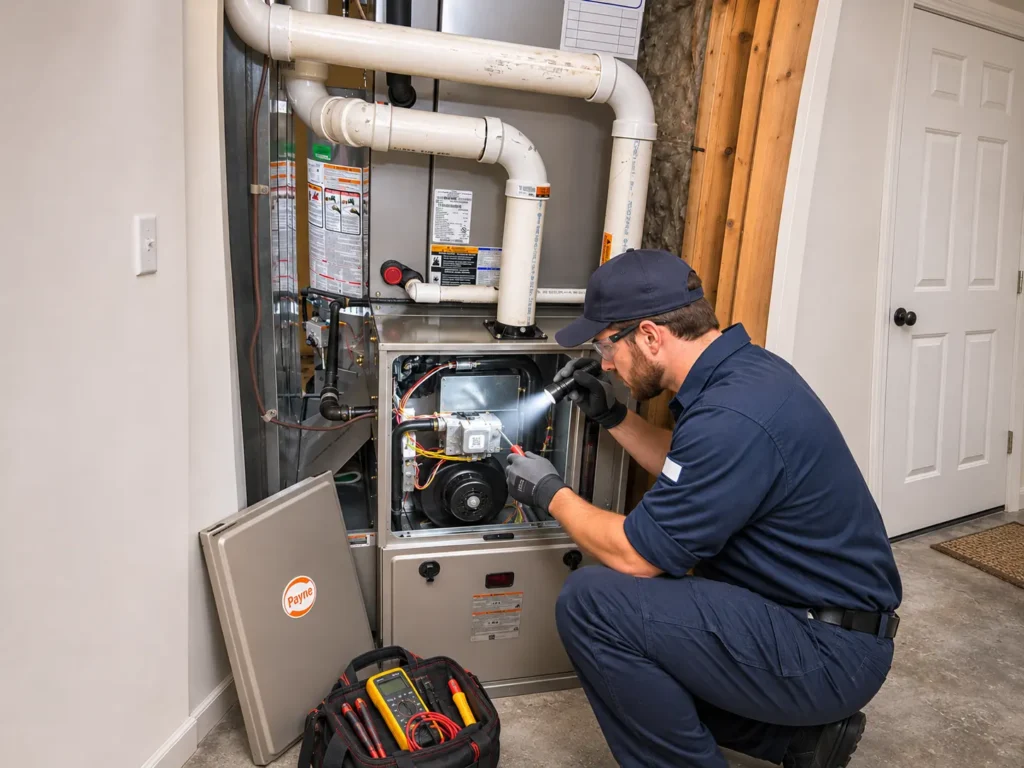
Is your furnace blowing cold air instead of keeping your home warm? It’s a frustrating problem, especially on a cold, damp winter day in Vancouver. You hear the furnace running, air comes through the vents, but the temperature inside your home barely changes.
The good news is that a furnace blowing cold air doesn’t always mean you need an expensive repair or a new heating system. Sometimes, the cause is as simple as an incorrect thermostat setting or a clogged air filter. Other times, it points to an ignition failure, restricted airflow, or a safety control shutting down the heat.
Understanding what might be happening can help you decide what to check yourself and when to call a professional.
In this guide, we’ll explain seven common reasons your furnace may be blowing cold air, what you can safely troubleshoot, and when to arrange professional furnace repair in Vancouver.
Why Is My Furnace Blowing Cold Air Instead of Heat?
A gas furnace works by burning fuel inside a sealed combustion system, transferring the heat through a heat exchanger, and using a blower fan to circulate warmed air throughout your home.
When something interrupts that process, the blower may continue running even though the furnace isn’t producing enough heat.
There is one important distinction: a brief burst of cool air isn’t necessarily a problem. Depending on your system, the fan may circulate some remaining cooler air at the beginning or end of a heating cycle. However, if the air stays cold, the furnace runs continuously without warming your home, or the system repeatedly shuts down, something needs attention.
Here are seven possible causes.
1. Incorrect Thermostat Settings
Before assuming your furnace needs repairs, check the thermostat.
One of the simplest explanations for a furnace blowing cold air is that the fan setting is switched to ON instead of AUTO.
When the fan is set to ON, it runs continuously, even when the furnace isn’t actively heating. As a result, room-temperature air may circulate through the vents between heating cycles.
What You Can Do
- Confirm that the thermostat is set to HEAT.
- Switch the fan setting from ON to AUTO.
- Set the temperature a few degrees above the current room temperature.
- Wait several minutes to see whether the furnace starts producing warm air.
If you have a battery-powered thermostat, check whether the batteries need replacement.
If the thermostat appears to be working but your furnace still isn’t heating, there may be a communication or equipment problem that requires professional diagnosis.
2. A Dirty or Clogged Furnace Filter
A clogged air filter is another common reason a furnace may stop heating properly.
Your furnace needs a steady supply of air to operate efficiently. Over time, dust, pet hair, and other particles collect in the filter, restricting airflow.
When airflow becomes too limited, the furnace may overheat. A safety control can then shut off the burners while the blower continues running to cool the equipment. This can leave you feeling cool air coming through the vents.
What You Can Do
Check your furnace filter for visible dirt and buildup. If it’s heavily clogged, replace it with the correct size and manufacturer-appropriate filter.
Depending on your system, filter type, and household conditions, filters may need attention every one to three months. Some larger media filters have longer replacement intervals, so follow the equipment manufacturer’s guidance.
If your furnace continues blowing cold air after replacing the filter, don’t keep repeatedly restarting it. An overheating issue may still be present.
Regular furnace maintenance and tune-ups can help identify airflow restrictions before they lead to unexpected heating problems.
3. Furnace Ignition System Problems
Modern gas furnaces typically use an electronic ignition system to light the burners. Some older equipment uses a standing pilot light.
If the ignition system fails, your furnace may attempt to start but never produce heat.
Potential causes include:
- A faulty hot-surface igniter
- Problems with the flame sensor
- Gas valve or fuel supply issues
- Control board or electrical faults
- A safety condition preventing ignition
You might hear the furnace attempting to start several times before shutting down or displaying an error code.
What You Can Do
Check whether the thermostat is requesting heat and whether the furnace is displaying an error indicator.
If you can see an error code through the furnace’s inspection window, write it down and provide it to your HVAC technician.
Avoid attempting to repair the igniter, bypass safety switches, adjust gas components, or manually light equipment that is not designed for manual ignition.
A qualified technician can inspect the ignition system, identify the underlying fault, and complete the necessary repairs safely.
4. Furnace Overheating and Safety Shutdown
Your furnace has built-in safety controls designed to prevent unsafe operating conditions.
If the internal temperature becomes too high, the high-limit switch may shut off the burners. The blower can continue running to remove excess heat from the system.
Once that happens, the air coming from your vents may gradually become cooler.
Restricted airflow is a frequent contributor to overheating, but it isn’t the only possibility.
Other causes can include:
- Closed or blocked supply registers
- Obstructed return-air grilles
- Problems with the blower motor
- Incorrect equipment airflow settings
- Internal component or control failures
What You Can Do
Make sure furniture, rugs, and other objects aren’t blocking your return-air grilles or supply vents.
Replace a dirty filter if needed, and leave the furnace’s designed airflow paths unobstructed.
If the system repeatedly overheats or stops producing heat, turn it off and request an inspection. Continuing to operate an overheating furnace can damage components and may create safety concerns.
5. Blocked Condensate Drainage
High-efficiency condensing furnaces produce water as part of their normal heating operation. That water needs to drain away through a condensate system.
If the drain line, trap, or condensate pump becomes blocked or fails, the furnace may shut down heating to protect the equipment.
This problem can be especially inconvenient during Vancouver’s wet winter months, although outdoor rainfall itself isn’t necessarily the cause of a condensate blockage.
Signs to Watch For
- Water collecting around the furnace
- A condensate pump that isn’t operating properly
- Repeated heating shutdowns
- Furnace error codes
- A furnace that starts but doesn’t complete a heating cycle
If you notice water around your furnace, avoid opening electrical compartments or attempting repairs that involve internal components.
An HVAC technician can inspect the drainage system, check the condensate pump and safety controls, and determine what is preventing normal operation.
6. Airflow or Ductwork Problems
Sometimes, the furnace itself is producing heat, but the warm air isn’t reaching every room effectively.
Damaged ductwork, disconnected ducts, poorly balanced airflow, or restricted air returns can create uneven temperatures throughout your home.
For example, your living room might feel comfortable while an upstairs bedroom remains unusually cold.
This is different from a furnace that produces no heat at all, but homeowners can experience both problems as poor furnace performance.
What You Can Do
Walk through your home and compare the airflow from different vents.
If only one or two rooms are affected, the problem may involve ductwork, airflow balancing, or insulation rather than the furnace’s heating components.
Canada Trust Heating & Cooling also provides venting and ducting services for homeowners experiencing airflow and distribution problems.
7. Worn or Failing Furnace Components
If your thermostat, filter, and visible airflow conditions appear normal, the issue may be caused by a malfunctioning internal component.
Gas furnaces depend on several electrical, mechanical, and safety components working together.
A fault in the blower system, pressure switch, control board, flame sensor, or another component can interrupt heating.
Some problems cause the furnace to shut down completely. Others allow the fan to operate without properly heating the air.
This is where professional troubleshooting becomes particularly important.
Replacing parts without confirming the cause can be expensive and may fail to resolve the actual problem.
A technician can test the equipment, identify the failed component, and explain whether repair or replacement makes more financial sense.
What Should You Check Before Calling for Furnace Repair?
If your furnace is blowing cold air, there are a few basic checks you can safely perform.
What to CheckWhat to Look ForThermostatHEAT mode selected, fan set to AUTOTemperature settingSet higher than the current room temperatureFurnace filterExcessive dirt or restricted airflowSupply and return ventsFurniture or objects blocking airflowFurnace displayVisible error codes or warning lightsWater around the furnacePossible condensate drainage issue
These checks may help you identify a simple issue, but they aren’t a substitute for a professional inspection.
Important safety reminder: If you smell natural gas, leave the building immediately and contact your gas utility’s emergency line from a safe location. If a carbon monoxide alarm sounds, evacuate and call 911. Do not attempt to restart or troubleshoot the furnace in either situation.
When Should You Call for Emergency Furnace Repair in Vancouver?
A furnace that isn’t producing enough heat is inconvenient, but certain situations require more immediate attention.
Consider urgent professional service if:
- Your furnace has completely stopped heating during cold weather.
- The system repeatedly shuts down or fails to ignite.
- You hear unusual banging, grinding, or screeching noises.
- You notice a persistent burning smell.
- Your home is becoming dangerously cold, particularly if children, older adults, or vulnerable individuals are present.
Gas leaks and carbon monoxide alarms require emergency services or utility assistance first, rather than waiting for an HVAC appointment.
For heating breakdowns, Canada Trust Heating & Cooling offers 24/7 emergency furnace repair in Vancouver and the Lower Mainland, including evenings, weekends, and holidays.
How Much Does Furnace Repair Cost in Vancouver?
The cost of furnace repair depends on the underlying problem, the equipment model, and the parts and labour required.
A dirty filter may be inexpensive to replace, while a failed blower motor, control board, or other major component can involve a more substantial repair.
The age and condition of your furnace also influence whether fixing the equipment is a sensible long-term investment.
Canada Trust Heating & Cooling currently advertises diagnostic calls starting at $99, with a repair quote provided before work begins. Confirm current pricing when booking, as rates and service conditions may change.
For an older furnace with recurring problems, it may be worth comparing the repair estimate with the cost of a replacement.
You can explore your options through our furnace installation, repair, and maintenance services.
How to Prevent Your Furnace From Blowing Cold Air Again
Not every furnace breakdown can be prevented, but routine maintenance significantly improves your chances of identifying problems before they disrupt your home’s heating.
A few practical habits can help:
- Inspect and replace furnace filters according to manufacturer recommendations.
- Keep supply vents and return-air grilles clear.
- Pay attention to unusual noises or frequent on-and-off cycling.
- Check your thermostat settings before the heating season.
- Arrange professional furnace servicing at least annually, or as recommended by the manufacturer.
- Address minor heating problems before they become larger repairs.
During a professional tune-up, a technician can inspect the ignition system, heat exchanger, venting, blower operation, and other important components.
If your furnace hasn’t been inspected recently, scheduling annual furnace maintenance in Vancouver is a sensible way to prepare for winter.
Professional Furnace Repair in Vancouver and the Lower Mainland
When your furnace stops keeping your home comfortable, you need to know what’s wrong and what it will take to fix it.
Canada Trust Heating & Cooling provides furnace repair, maintenance, installation, and emergency heating services throughout Greater Vancouver, including Burnaby, Coquitlam, Port Moody, Port Coquitlam, Surrey, Richmond, and surrounding communities.
Our Red Seal certified technicians work with major furnace brands, including Lennox, Carrier, Trane, Goodman, Rheem, Bryant, and Napoleon.
Whether you’re dealing with an ignition failure, an overheating furnace, or a heating system that keeps shutting down, our team can inspect the equipment and recommend the appropriate next steps.
Furnace blowing cold air? Don’t wait for your home to get colder.
Call Canada Trust Heating & Cooling at 604-339-1933 or contact our team to arrange a furnace inspection or repair.
Frequently Asked Questions
Why is my furnace blowing cold air when the heat is on?
Your furnace may be blowing cold air because of an incorrect thermostat setting, dirty air filter, ignition problem, overheating condition, or malfunctioning component. If the air remains cold after checking your thermostat and filter, arrange professional furnace troubleshooting.
Can a dirty furnace filter cause cold air?
Yes. A heavily clogged filter can restrict airflow and cause the furnace to overheat. When a high-limit safety switch shuts off the burners, the blower may continue circulating cooler air. Replacing the filter may help, but repeated overheating requires a professional inspection.
Why does my furnace blow cold air for a few minutes before heating?
Some furnaces circulate a small amount of cooler air during the beginning or end of a heating cycle. A short period of cool airflow can be normal. If the furnace never begins heating properly, however, it may have an ignition, airflow, or control problem.
Should I turn off my furnace if it keeps blowing cold air?
If your furnace repeatedly attempts to start, overheats, or runs continuously without producing heat, turning it off and contacting a technician is a sensible precaution. If you smell gas or a carbon monoxide alarm activates, evacuate immediately and contact emergency services or the gas utility.
Can I fix a furnace blowing cold air myself?
You can safely check thermostat settings, inspect the filter, and ensure vents aren’t blocked. Repairs involving gas valves, ignition components, electrical controls, or internal safety devices should be handled by a qualified HVAC technician.
Does Canada Trust Heating offer emergency furnace repair in Vancouver?
Yes. Canada Trust Heating & Cooling offers 24/7 emergency furnace repair throughout Vancouver and the Lower Mainland, including weekends and holidays. Call 604-339-1933 for assistance.